
 swediworld
Project at a glance
- Location: Usar community, Kwande Local Government Area, Benue State
- Participants: Twenty women farmers
- Supported by: SWEDIWorld
- Output: Eight bags of garri recorded in the first cycle; fifty bags of cassava flakes later reported ready to go
Overview
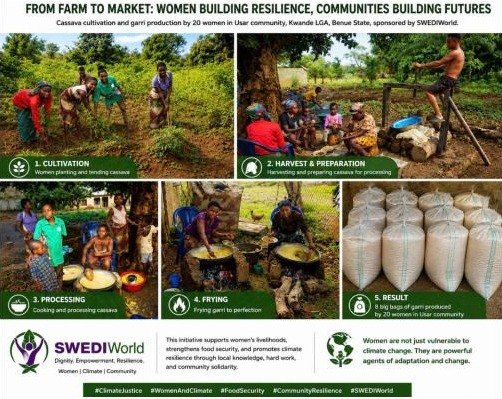
“Farmland is more than land. For many rural women and families, it is livelihood, food security, resilience and survival.” That is the reality behind this SWEDIWorld-supported project in Usar community, Kwande Local Government Area of Benue State, where twenty women carried out the full cassava value chain together.
What the women did
- Cultivation: planting and tending cassava on community farmland.
- Harvest and preparation: harvesting and preparing the cassava for processing.
- Processing: cooking and processing the cassava.
- Frying: frying the garri to perfection.
- Result: eight big bags of garri produced by the twenty women.
Why it matters
The images document more than a harvest. They show the strength, cooperation and determination of rural women who contribute to household food security and local livelihoods while carrying the weight of climate vulnerability, food-system pressures and unpaid care work. At SWEDIWorld, we believe gender-responsive, locally grounded approaches are essential to community resilience: women at the grassroots are not only vulnerable to climate impacts, they are also central actors in adaptation, food security and community survival.
A follow-up update reported fifty bags of cassava flakes (garri) ready to go to market.
To support, partner with or learn more about this work, write to contact@swediworld.org.