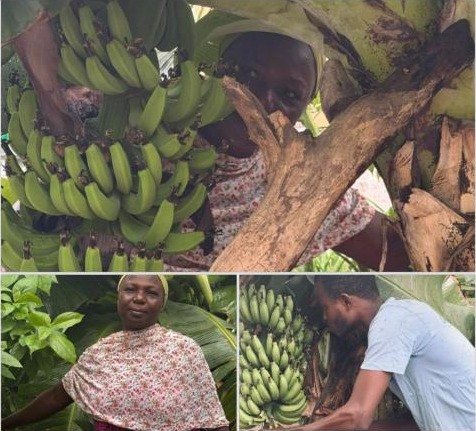
This World Environment Day, SWEDIWorld took its message beyond awareness and into the field. The organisation mentored women and young people on practical ways to strengthen food security through sustainable food production.
Banana and maize farming with women and young people.
What happened
The banana trees, maize fields and shared labour captured in these moments reflect more than harvests. They represent knowledge shared, resilience built and communities working together to secure their future. By promoting responsible land use and practical agricultural skills, SWEDIWorld is helping communities build resilience against hunger and the impacts of climate change.
Mentoring in the field.
“Food security begins with environmental stewardship, and mentoring communities today is an investment in a greener and more food-secure tomorrow. One lesson shared. One harvest at a time.”
Mentorship runs through SWEDIWorld’s work with women farmers: food security, the organisation says, “starts with knowledge”.
To support, partner with or learn more about this work, write to contact@swediworld.org.
Location: Usar community, Kwande Local Government Area, Benue State
Participants: Twenty women farmers
Supported by: SWEDIWorld
Output: Eight bags of garri recorded in the first cycle; fifty bags of cassava flakes later reported ready to go
Overview
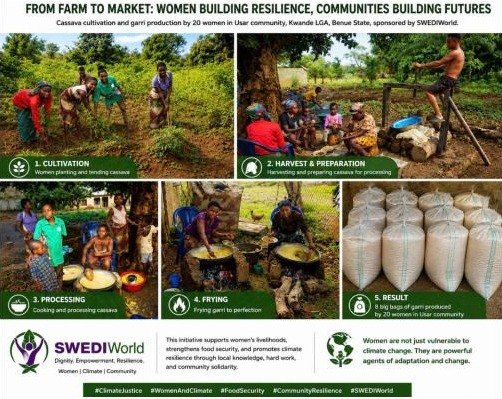
“Farmland is more than land. For many rural women and families, it is livelihood, food security, resilience and survival.” That is the reality behind this SWEDIWorld-supported project in Usar community, Kwande Local Government Area of Benue State, where twenty women carried out the full cassava value chain together.
What the women did
Cultivation: planting and tending cassava on community farmland.
Harvest and preparation: harvesting and preparing the cassava for processing.
Processing: cooking and processing the cassava.
Frying: frying the garri to perfection.
Result: eight big bags of garri produced by the twenty women.
From farm to market: women building resilience, communities building futures.
Why it matters
The images document more than a harvest. They show the strength, cooperation and determination of rural women who contribute to household food security and local livelihoods while carrying the weight of climate vulnerability, food-system pressures and unpaid care work. At SWEDIWorld, we believe gender-responsive, locally grounded approaches are essential to community resilience: women at the grassroots are not only vulnerable to climate impacts, they are also central actors in adaptation, food security and community survival.
A follow-up update reported fifty bags of cassava flakes (garri) ready to go to market.
To support, partner with or learn more about this work, write to contact@swediworld.org.
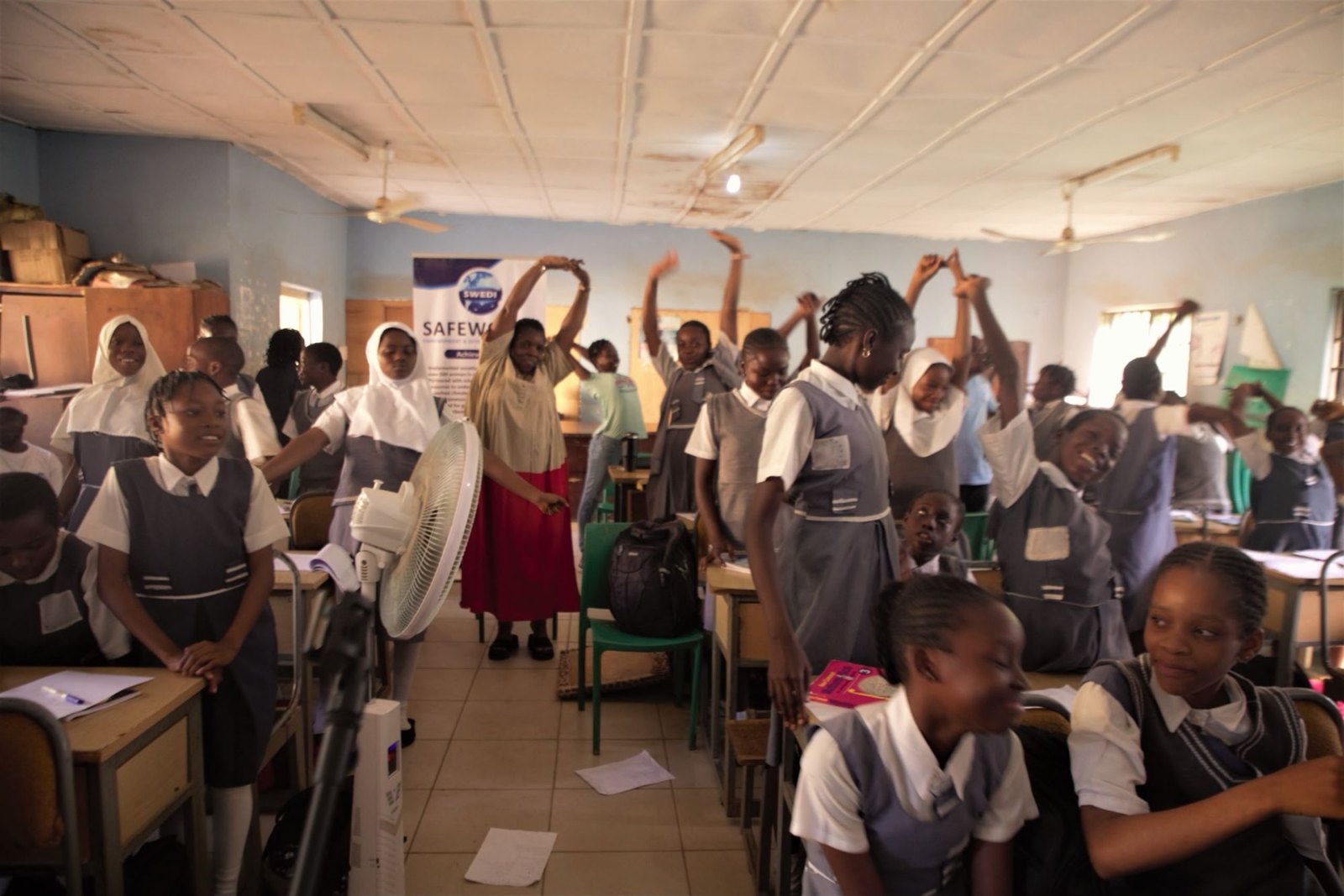
SWEDIWorld is building a movement of young climate ambassadors across Nigeria. In April 2026 it shared two presentations by one of its Ambassadors, a 14-year-old girl from Abuja, as the first of many young voices it plans to feature.
Climate change, global warming, adaptation and mitigation
In a video, the Ambassador explained the difference between climate change and global warming, and what adaptation and mitigation mean in practice:
Climate change brings extreme temperature shifts, both hotter and colder.
Global warming is the heat-trapping effect of greenhouse gases.
Adaptation helps communities adjust to these impacts, for example by moving to higher ground because of rising sea levels.
Mitigation reduces the problem at the source through renewable energy, better transportation and planting trees in our communities.
“Moments like this,” SWEDIWorld’s founder wrote, “reaffirm that the next generation is not just ready; they are already stepping up.”
How gender inequality in education affects the economy
In a second presentation, the Ambassador examined how gender inequality in Nigeria’s education sector affects the economy. She proposed two practical solutions:
Community campaigns to shift mindsets, challenge cultural barriers, educate parents and leaders, and create safer spaces for girls to thrive; and
Monitoring of progress through data, accountability and transparent reporting.
She concluded that community campaigns are the most effective because they allow direct engagement with the communities that need change the most, which is exactly what SWEDIWorld stands for: empowering young voices to drive real solutions in girls’ education and gender equality.
What is one action you can take today to support girl-child education in your community?
To support, partner with or learn more about this work, write to contact@swediworld.org.
Location: Apo Legislative Junior Secondary School, Abuja (FCT)
Led by: SWEDIWorld
Partners: Feminist Futures (technical partner); approved by the FCT Universal Basic Education Board (UBEB)
Participants: Adolescent girls of the school
Focus: Climate justice, futures thinking and storytelling; digital safety; menstrual health and dignity
Status: Pilot completed; plans under way to scale to more public schools in the FCT and beyond
Overview
Girls’ Voices for Climate Just Futures is SWEDIWorld’s school-based programme for adolescent girls. It treats girls not as passive beneficiaries of development but, in the organisation’s words, as “knowledge holders, innovators and active contributors to solutions for the challenges facing their communities”. The pilot was delivered at Apo Legislative Junior Secondary School in Abuja, in collaboration with Feminist Futures and with the approval of the FCT Universal Basic Education Board.
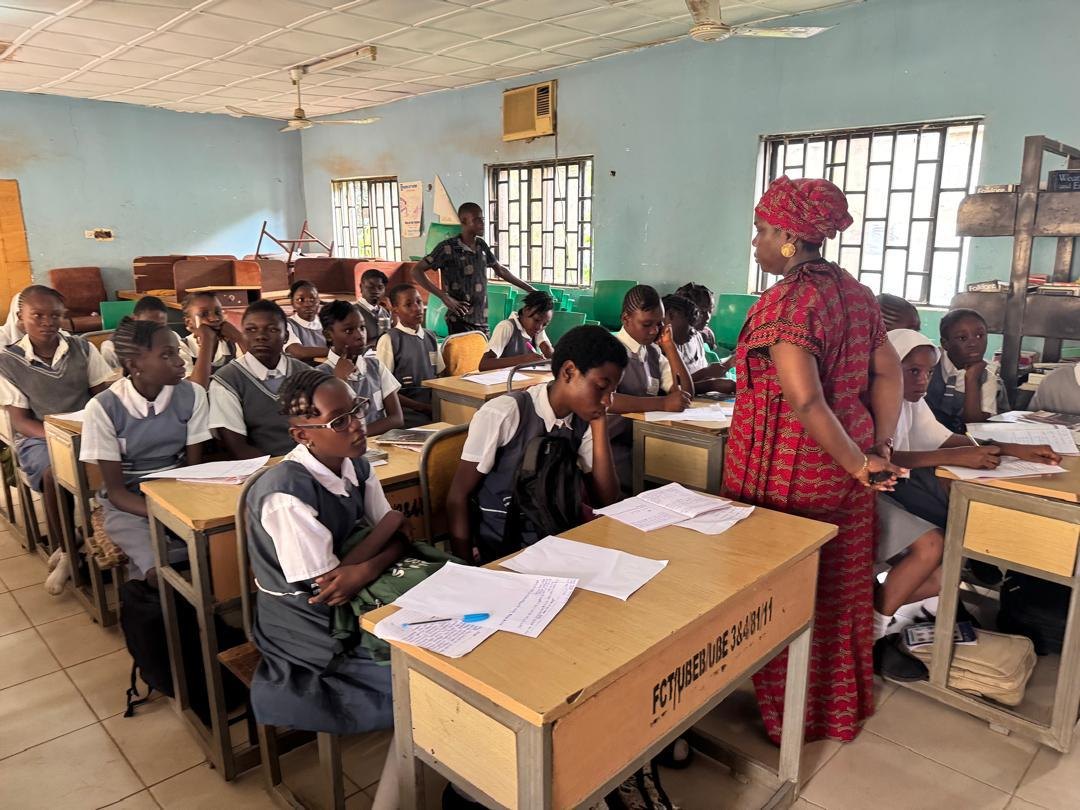
A session at Apo Legislative Junior Secondary School, Abuja.
The challenge
Girls are regularly invited into conversations about climate change but rarely into the decisions that follow. They also face barriers that affect their ability to learn and take part: limited access to menstrual health resources, exposure to harassment, including online, and few opportunities to practise leadership. The programme set out to address these together rather than as separate problems.
What the programme did
The pilot ran as a series of weekly sessions from the autumn of 2025, planned over eight weeks. Girls learned to understand climate justice through futures thinking and storytelling as tools for learning and action. By the fourth week (20 October 2025), they had identified signals of change, developed alternative climate scenarios and began world-building exercises to imagine what a climate-just Nigeria could look like from their own experience.
At the fourth session, held on 20 October 2025, a SWEDIWorld Ambassador shared highlights from earlier sessions and several girls presented their homework. Working in small groups, the girls built “Futures Wheels”, choosing signals such as girls in science and technology, climate change and community safety to explore how these trends could shape what happens next in their lives and surroundings. In a follow-up session, another Ambassador took the girls through the effects of climate change on their daily lives and how they are already mitigating them, sparking conversations on adaptation, resilience and taking small actions towards a more sustainable future.
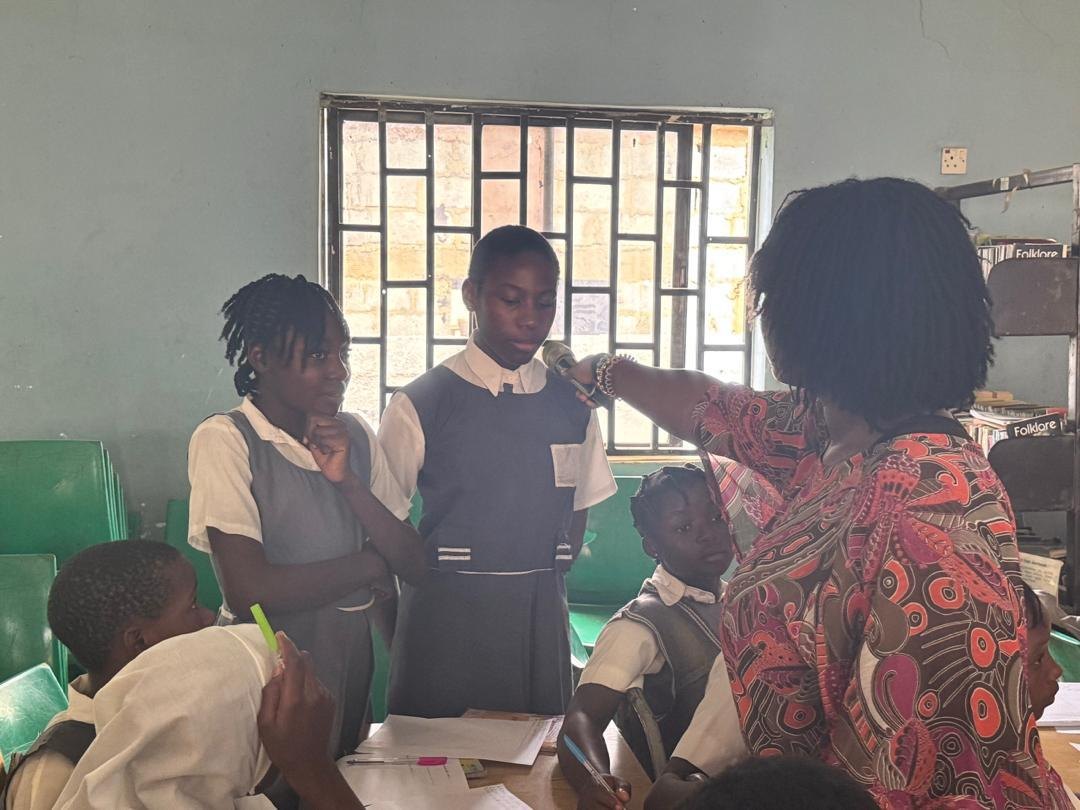
Girls take part in a facilitated discussion.Girls work on their activity sheets in class.
Skills and support provided
Climate justice knowledge
Leadership and futures-thinking skills
Digital safety awareness
Menstrual health education
Scholarships and hygiene support
Results to date
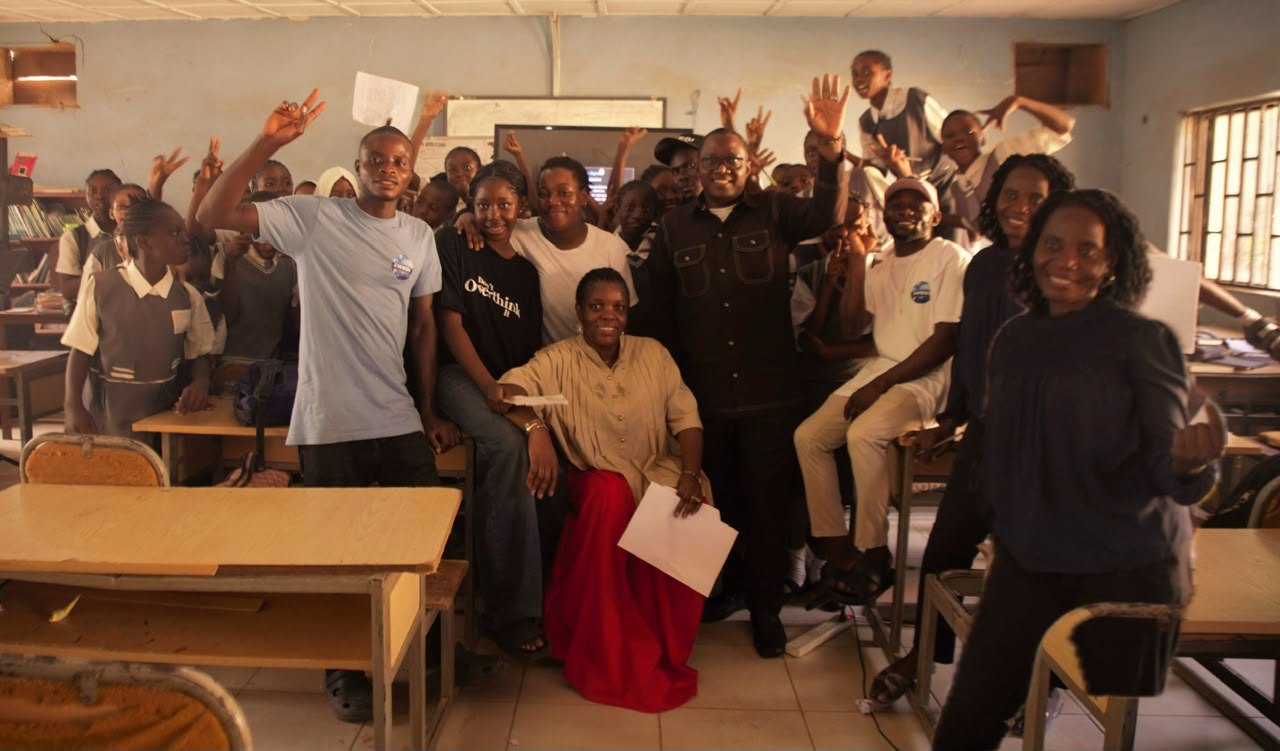
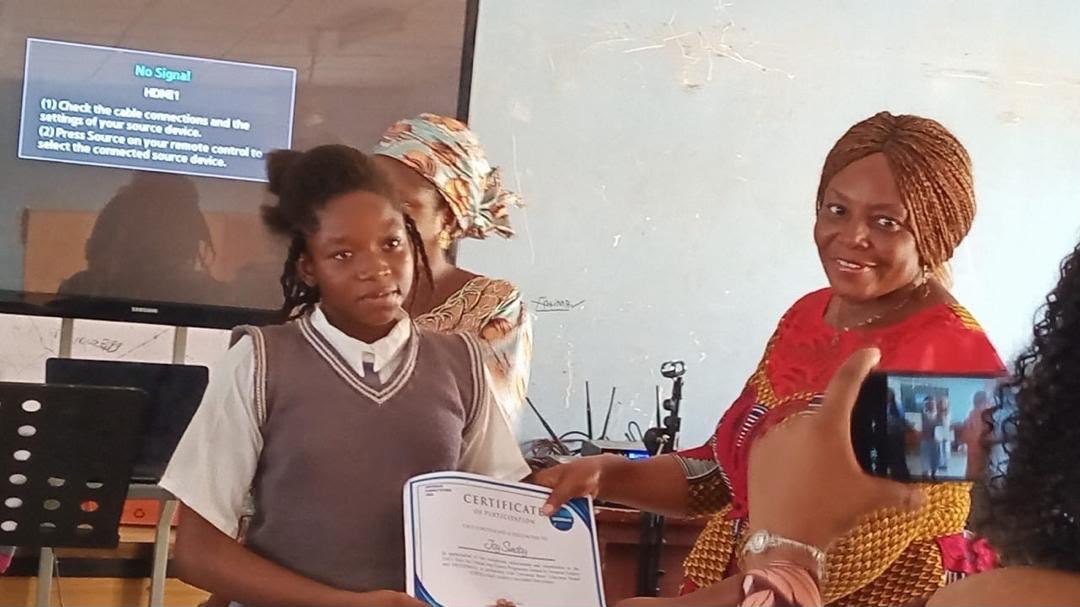
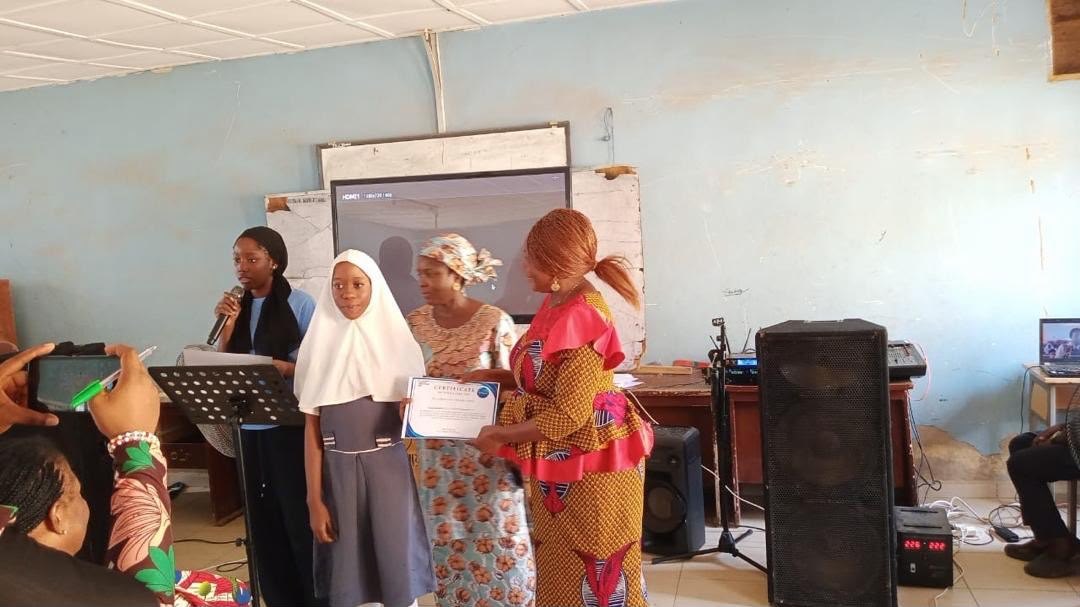
The pilot strengthened climate leadership, confidence and menstrual dignity among the girls. Pupils took the microphone to present their own ideas, and participants received certificates of participation at the close of the programme. The initiative drew press attention, including a Vanguard report headlined “CSO empowers Abuja school with development initiative”.
A pupil presents to her classmates.Certificates of participation were presented to the girls.A participant receives her certificate.
Next steps
With strong outcomes recorded, SWEDIWorld is advancing plans to scale the model across more public schools within the Federal Capital Territory and beyond, working with UBEB, the Department of Climate Change and other institutions, “to empower resilient girls, engaged boys, stronger schools, and climate-aware communities”.
To support, partner with or learn more about this work, write to contact@swediworld.org.
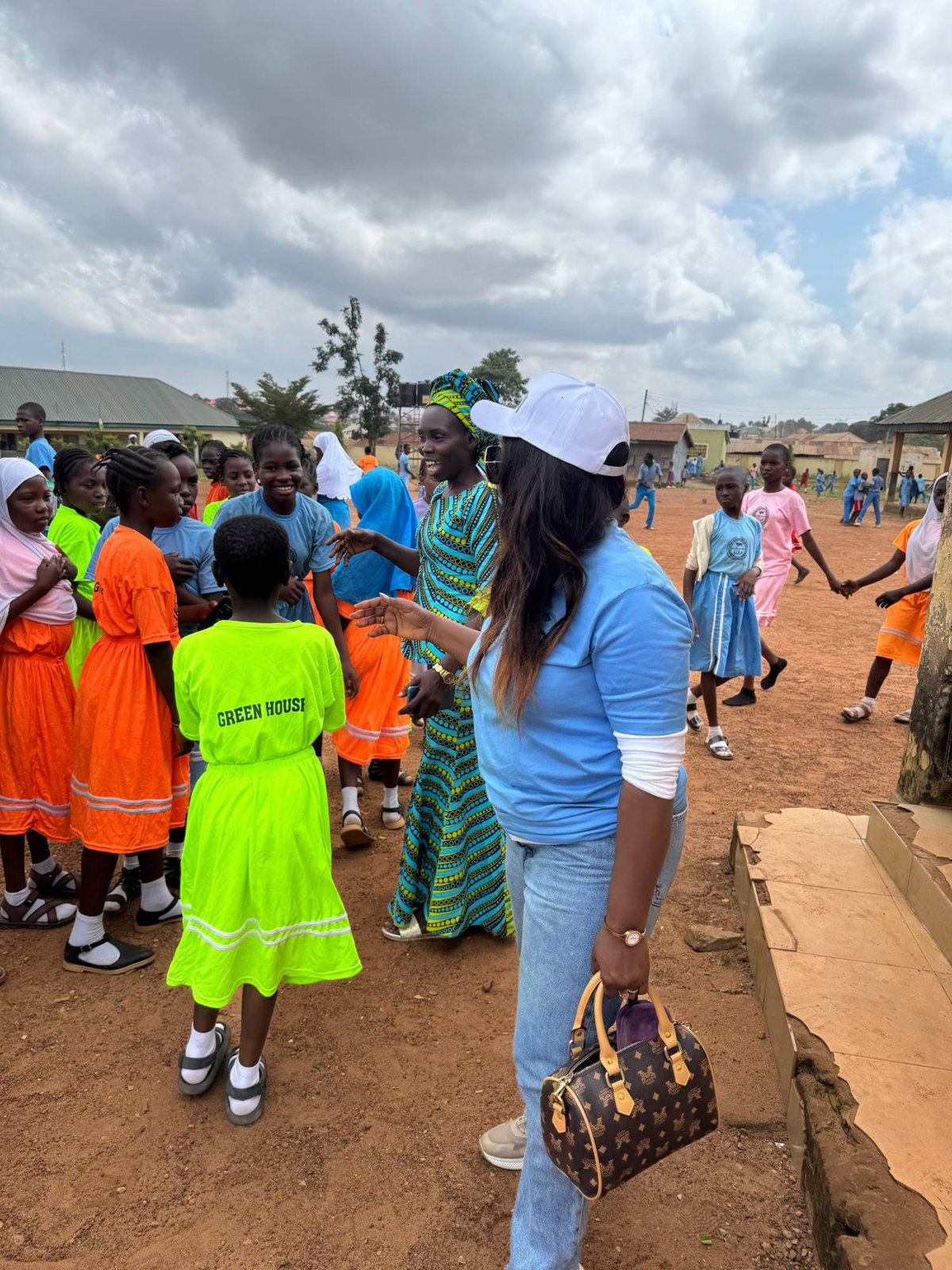
SWEDIWorld delivered climate change education and handwashing hygiene sessions to young adolescent girls and boys, equipping them with practical knowledge for healthier and more climate-aware lives.
Building capacity in the younger generation is central to SWEDIWorld’s approach: young people who understand both the health basics and the climate pressures around them become advocates in their schools, homes and communities.
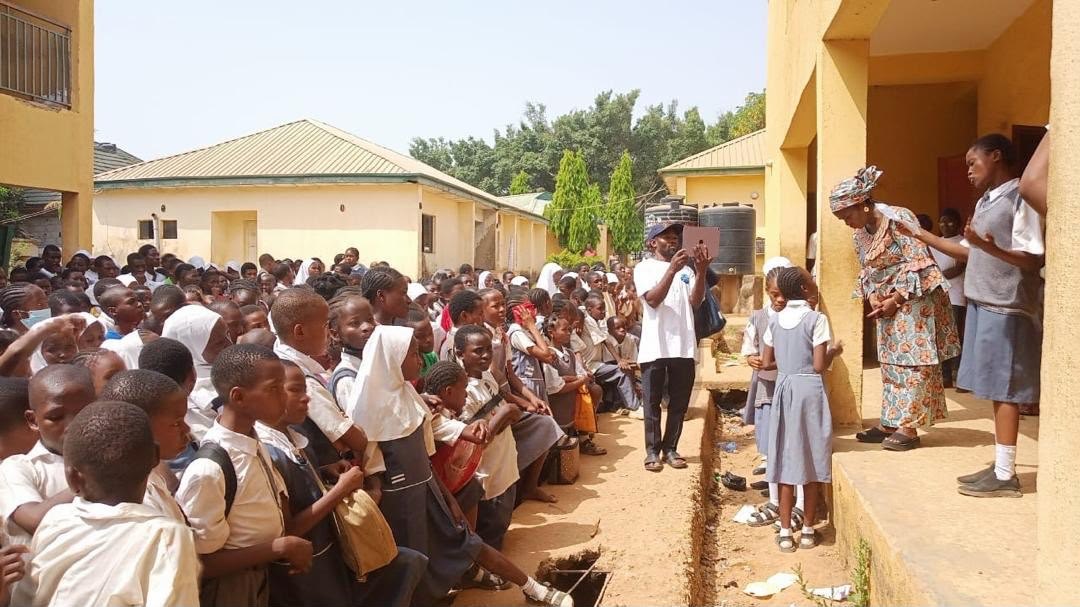
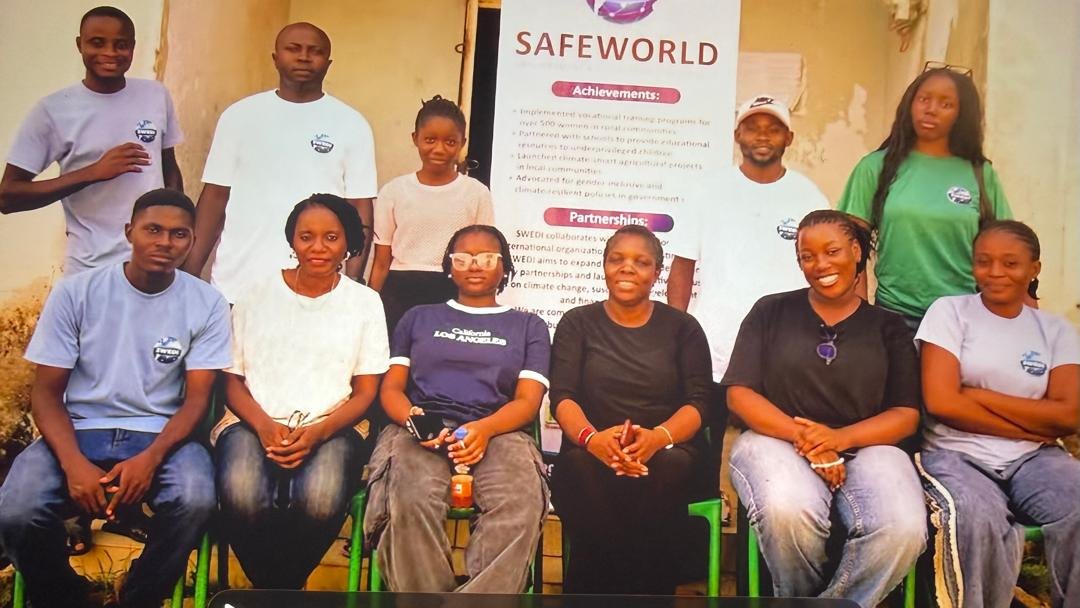
SWEDIWorld team members with pupils during a school outreach.
To support, partner with or learn more about this work, write to contact@swediworld.org.
Location: International Market, Makurdi, Benue State, where survivors of the Yelewata conflict are relocated
Led by: Sewuese Asa, Executive Director, SWEDIWorld
Support provided: Essential items, cash support and counselling
Overview
On 3 January 2026, SafeWorld Empowerment & Development Initiative (SWEDIWorld), led by its Executive Director, Sewuese Asa, carried out a humanitarian outreach at the International Market in Makurdi, where survivors of the Yelewata conflict are relocated. The response combined the distribution of essential items, cash support and counselling for those most affected, and was conducted in a calm, organised and dignified manner despite a very large turnout.
Who was prioritised
Support was directed first to the most vulnerable:
Children
Adolescent girls
Elderly women
Individuals facing extreme protection risks
Principles
All interventions were guided by international humanitarian principles, including impartiality, humanity and the commitment to do no harm, consistent with the Sphere Standards.
Looking ahead
While SWEDIWorld could not reach everyone, the scale of unmet need clearly exceeds current resources. The organisation welcomes partnerships and support to enable a broader and sustained response for Yelewata and similar communities.
Location: Apo Legislative Quarters Junior Secondary School, Abuja
Occasion: 16 Days of Activism against Gender-Based Violence (final day, 10 December 2025)
Method: Futures Foresight Storytelling
Guests: Representatives of the Federal Ministry of Environment (Department of Climate Change) and FCT UBEB; the school Principal and supervising teachers
Overview
On the closing day of the 16 Days of Activism against Gender-Based Violence, SWEDIWorld engaged adolescent girls of Apo Legislative Quarters Junior Secondary School on digital gender-based violence. Using Futures Foresight Storytelling, the girls explored climate change, online safety and how to speak out against abuse, building on the Girls’ Voices for Climate Just Futures pilot running in the school.
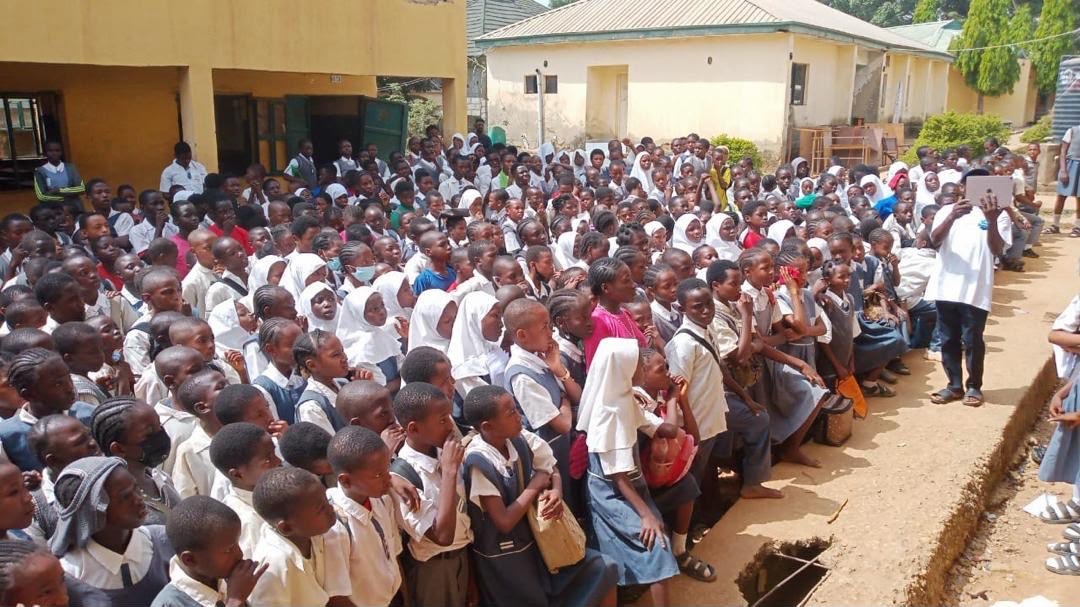
Pupils gather in the school compound for the session.
Guests and partners
Ms. Elsie, representing Dr. Iniobong Abiola-Awe, Director, Department of Climate Change, Federal Ministry of Environment
Mrs. Ogbonka, representing the FCT Universal Basic Education Board (UBEB)
The school Principal and supervising teachers
Scholarships awarded
SWEDIWorld Ambassadors awarded scholarships to two trainee ambassadors.
Comptroller of Customs Mimi Asa awarded scholarships to several pupils.
In a video shared by SWEDIWorld in May 2026, Comptroller Asa, moved by the impact of SWEDIWorld’s work, spontaneously extended scholarships to three additional students on the spot.
The session also featured a goodwill video message from gender expert Thays Prado, encouraging the girls to continue their leadership journey.
In the press
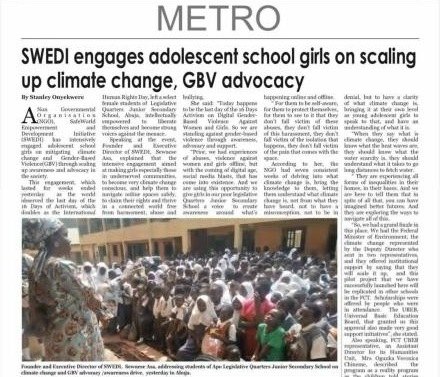
The Metro newspaper reported the event under the headline “SWEDI engages adolescent school girls on scaling up climate change, GBV advocacy”. The Founder and Executive Director, Sewuese Asa, explained that the engagement aimed at making girls, especially those in underserved communities, conscious of climate change and equipped to navigate online spaces safely and to claim their rights.
Press clipping from the Metro newspaper.
To support, partner with or learn more about this work, write to contact@swediworld.org.
“We didn’t just plant trees. We claimed space.” In New City, Makurdi, women and girls led the way in a tree-planting effort that SWEDIWorld shared in July 2025. Weeks earlier, on World Environment Day 2025, the organisation had committed to championing climate justice where it matters most: our land, our women, our future.
The activity was anchored by grassroots leaders William Asa and Luper Asaku. It was about more than greening the land: it was about reclaiming voice, visibility and agency. As SWEDIWorld puts it, this was not symbolic. It was strategic, grounded and bold, a reminder that women and girls are not asking to be included; they are already doing the work.
The initiative is part of SWEDIWorld’s growing presence in Benue State and its commitment to restoring hope, one community at a time.
To support, partner with or learn more about this work, write to contact@swediworld.org.