When Funding Dries Up: Lessons from the EPIC-Africa Webinar on US Funding Cuts

On 31 July 2025, SWEDIWorld followed the EPIC-Africa webinar “From Fragility to Fortitude: The Impact of US Government Funding Cuts on African CSOs”, which unpacked the immediate and structural effects of the cuts on civil society organisations across the continent: organisations shrinking, pausing or shutting down; staff laid off; programmes discontinued; partnerships lost.

Beyond the data, the webinar named something deeper: grief, and then clarity. The civil society model many organisations have long depended on, with external funding and externally driven priorities, is no longer sustainable. The report accompanying the webinar challenges the sector to rebuild on different foundations:

  • unrestricted funding;
  • locally led agendas;
  • shared infrastructure; and
  • sector-wide collaboration over competition.

“As a newer organisation shaped by the realities of shrinking space and shifting priorities,” SWEDIWorld wrote, “this moment reinforces our belief in designing from the ground up: intentionally, collaboratively and with sustainability in mind. We are listening, and we are building.”
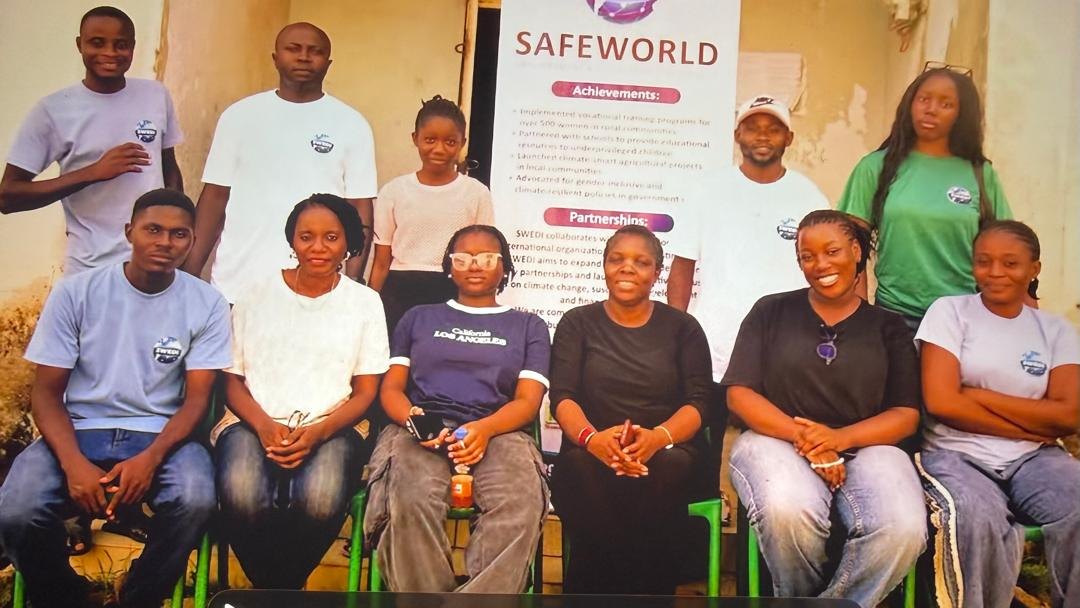
Makurdi Rising: Women and Girls Plant Trees with Purpose

Overview

“We didn’t just plant trees. We claimed space.” In New City, Makurdi, women and girls led the way in a tree-planting effort that SWEDIWorld shared in July 2025. Weeks earlier, on World Environment Day 2025, the organisation had committed to championing climate justice where it matters most: our land, our women, our future.

The activity was anchored by grassroots leaders William Asa and Luper Asaku. It was about more than greening the land: it was about reclaiming voice, visibility and agency. As SWEDIWorld puts it, this was not symbolic. It was strategic, grounded and bold, a reminder that women and girls are not asking to be included; they are already doing the work.

The initiative is part of SWEDIWorld’s growing presence in Benue State and its commitment to restoring hope, one community at a time.

To support, partner with or learn more about this work, write to contact@swediworld.org.

Shaping the Next Gender Action Plan: SWEDIWorld at the UNFCCC Workshop in Bonn

SafeWorld Empowerment and Development Initiative (SWEDIWorld) took part in the UNFCCC Gender Action Plan Workshop held during the June 2025 United Nations Climate Change Conference (SB62) in Bonn, Germany.

The workshop brought together governments, UN agencies and civil society organisations to co-develop the next phase of the Gender Action Plan, scheduled for adoption at the 30th Conference of the Parties (COP30) in Belém, Brazil. It was facilitated by a team that included Fleur Newman of the UNFCCC Secretariat, Thays Prado of the Feminist Climate Movement, UN Women gender experts and UNFCCC technical staff.

Participants worked through collaborative mapping, visual storyboarding, peer storytelling and co-creation exercises to design inclusive climate strategies that reflect global realities. SWEDIWorld’s Executive Director, Sewuese Asa, joined the workshop virtually and contributed reflections on:

  • centring adolescent girls and women in climate action;
  • addressing the barriers faced by women and girls displaced by conflict; and
  • integrating education and menstrual dignity as essential components of gender-responsive climate strategies.

SWEDIWorld’s own programming, from menstrual hygiene outreach in underserved public schools across the Federal Capital Territory to eco-literacy and tree-planting initiatives in conflict-affected communities in Benue State, grounds these contributions in practice.

The experience informs SWEDIWorld’s continuing advocacy for gender-responsive climate action, including its later work to take the Belém Gender Action Plan to communities in Abuja.

How Do We Fund the Future We Say We Want? Decarbonizing Infrastructure in Nigeria Summit

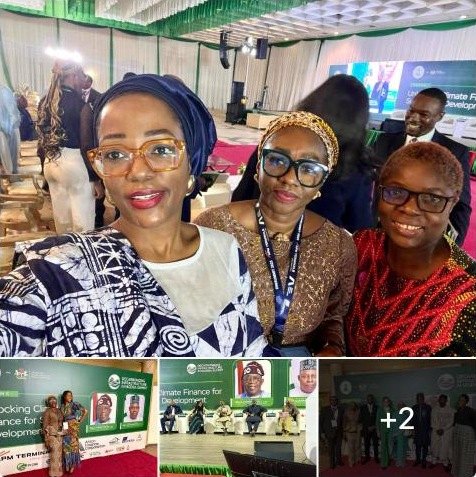
On 2 July 2025, SWEDIWorld’s founder joined policymakers, private-sector actors and community voices at the Decarbonizing Infrastructure in Nigeria Summit at the Presidential Villa, Abuja, held with the National Council on Climate Change Secretariat. The summit asked a practical question: how do we fund the future we say we want?

With fellow change-makers at the summit, including Mrs. Titilayo Oshodi.

Key takeaways

  • Vice President Kashim Shettima shared that 75% of Nigeria’s emissions come from infrastructure, and announced a USD 60 million Green Port project to cut diesel use.
  • Dr. Nkiruka Maduekwe emphasised how urgent the transition is and the key role of the private sector.
  • Musaddiq Mustapha spoke about the need to give states and local actors the tools to lead, and not only Abuja.
  • Participants kept returning to finance: how to unlock it, how to localise it, and how to ensure communities can actually access it, “not just big numbers, but real money in the hands of people doing real work”.

Why it matters to SWEDIWorld

SWEDIWorld works at the community level, in schools, planting trees, educating girls and building climate solutions from the ground up, which is where the benefits of climate finance have to land. Being in rooms where infrastructure and finance decisions are made helps the organisation make the case for efficient systems that align with national and global climate goals and that reach women, girls and smallholder farmers.

Do you have questions? Call or visit us.

+234 803 328 2977

697 Idris Gidado, Wuye, Federal Capital Territory, Nigeria

contact@swediworld.org

Newsletter

Occasional updates on the work — a few a year, no more.

© 2026 SWEDIWorld — Safeworld Empowerment & Development Initiative. All rights reserved.

Site by Mbahar Solomon