“Make Women Farmers Drivers of Agricultural Interventions”: SWEDIWorld in Vanguard

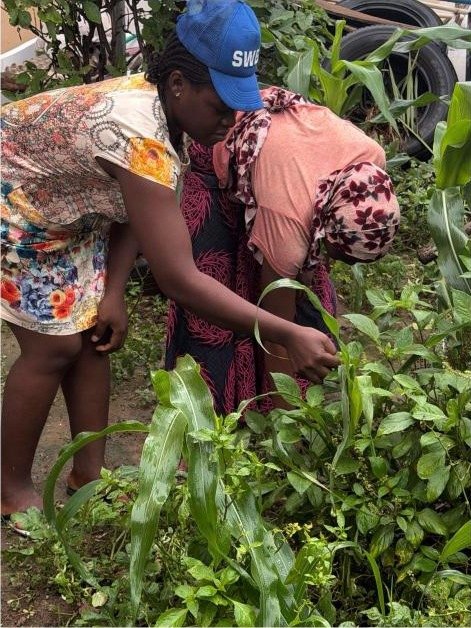
On 21 October 2026, Vanguard reported a call by stakeholders for governments at all levels to make women farmers active drivers of agricultural interventions, not merely beneficiaries, as one way of closing Nigeria’s food gap. SWEDIWorld’s Founder and Executive Director, Sewuese Asa, was among those who spoke.

What SWEDIWorld said

Describing the exclusion of women farmers as an obstacle to food security, Sewuese Asa said that “Nigeria cannot close its food gap while leaving women farmers at the margins of agricultural interventions”. She stressed that “this is not a gap in ability. It is a gap in access”, and identified four major constraints:

  • limited land ownership,
  • inadequate inputs,
  • weak extension services, and
  • underrepresentation in agricultural leadership.

She urged governments to implement the revised National Gender Policy on Agrifood Systems, with clear targets and adequate funding.

Sharing the feature on LinkedIn, she added: “We cannot talk about food security without addressing the inequalities that limit women’s access to land, finance, agricultural inputs, technology and decision-making opportunities. Women farmers are already contributing to food production and sustaining households. What they need is fair access to resources, meaningful representation and agricultural policies that recognise their contribution.”

The wider conversation

Other stakeholders quoted in the report included the All Farmers Association of Nigeria, DeBranch Farmers Limited, JetFarms and D’More Food & Spices, and ActionAid Nigeria, who called for interventions that reach women at scale, measure economic outcomes, and expand access to irrigation, mechanisation, storage, processing, land and finance.

Read the full report on the Vanguard website: “Make women farmers drivers of agric interventions to close food gap — Stakeholders” (Vanguard, 21 October 2026, also in the AgroBiz section, page 10 of the print edition).
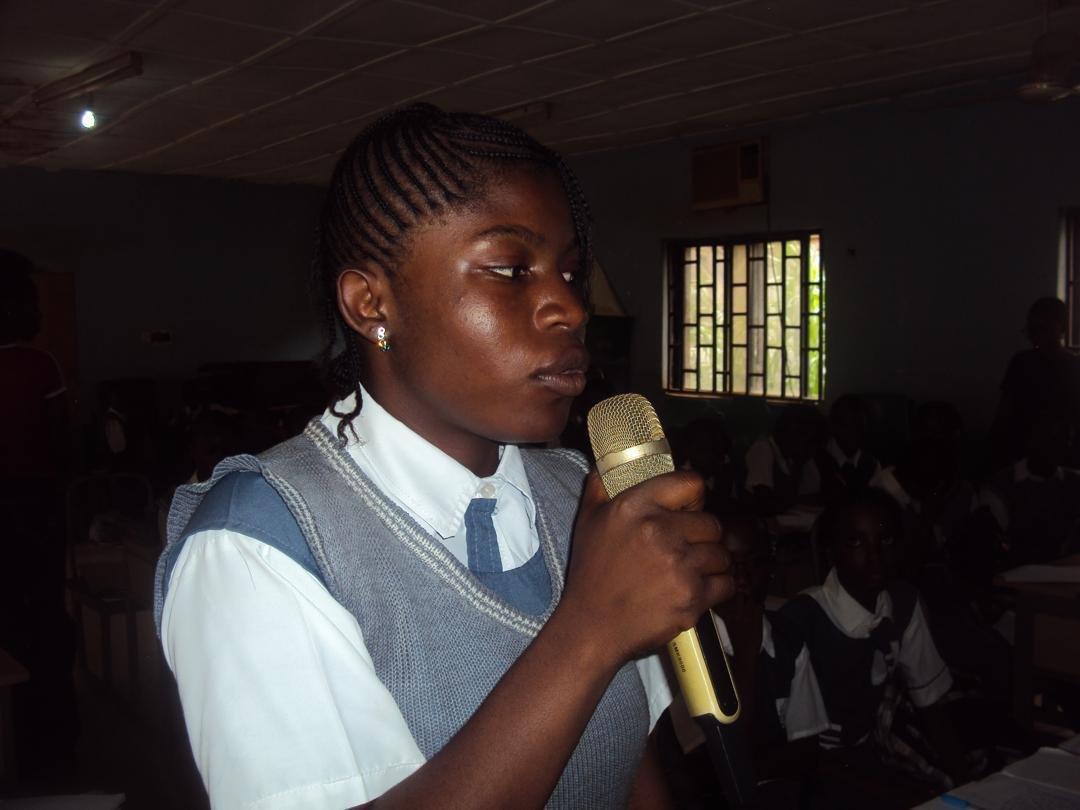
International Day of the Girl Child 2026: Her Voice. Her Future. Her Planet.

Every girl deserves the opportunity to learn, to live in safety and to shape her own future. Yet for millions of girls, the journey to adulthood remains marked by child marriage, gender-based violence, poverty and barriers to education.

The United Nations established the International Day of the Girl Child to recognise girls’ rights and the unique challenges they face. In 2026, the call to action is particularly important: ending child marriage and investing in girls’ rights must remain priorities for governments, communities and development partners.

UNICEF continues to highlight the consequences of child marriage for girls’ education, health and future opportunities. UNESCO advances the right to inclusive and equitable education, while the United Nations Population Fund (UNFPA) works to protect adolescent girls’ health, bodily autonomy and reproductive rights.

Girls and climate decisions

Beyond education and protection, girls must also have a voice in decisions about the environment and the future of their communities. Through the UNFCCC process, the Women and Gender Constituency advocates for gender-responsive climate action and the meaningful participation of women and girls in climate policy. In Nigeria, translating these commitments into reality requires sustained action by government institutions, schools, civil society, families and community leaders.

Our commitment

At SWEDIWorld, we believe girls are not merely beneficiaries of development. They are knowledge holders, innovators and active contributors to solutions for the challenges facing their communities. Through our work on girls’ education, menstrual dignity and climate justice, including the Girls’ Voices for Climate Just Futures initiative, we are creating space for adolescent girls to express their perspectives and contribute ideas about the futures they want.

Girls must be safe enough to learn, supported enough to thrive and heard enough to lead.

Ending child marriage, protecting girls’ rights and investing in their education and leadership cannot be achieved through a single campaign or organisation. It requires sustained commitment, adequate resources and collective action.

Lessons from the Green Climate Fund Regional Dialogue in Accra

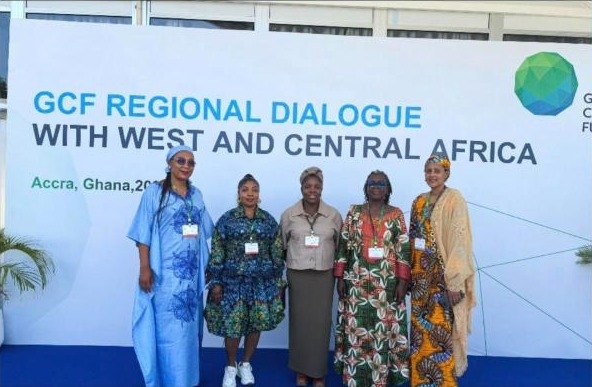
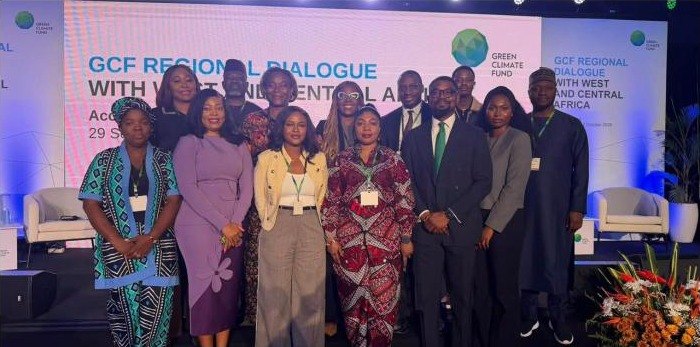
SWEDIWorld’s founder, Sewuese Asa, took part as a civil society observer in the Green Climate Fund (GCF) Regional Dialogue with West and Central Africa in Accra, Ghana, from 29 September to 2 October 2026.

The Nigerian delegation at the dialogue.

The Nigerian delegation included colleagues from the National Council on Climate Change, Nigeria’s National Designated Authority, the Federal Ministry of Finance, NIRSAL, the Development Bank of Nigeria, the Nigeria Sovereign Investment Authority, the Global Green Growth Institute and civil society. She also joined colleagues from the GCF Observer Network of Civil Society, Indigenous Peoples and Local Communities.

With colleagues from the GCF Observer Network of Civil Society, Indigenous Peoples and Local Communities.

A good idea is not automatically a good investment

In a project clinic, participants examined a proposed solar irrigation project for farmers. It sounded promising, but the questions went deeper: Is there enough water? What are the climate risks? What is the baseline? Is there a market? Can farmers repay the financing? What preparation is still needed? The exercise changed the way SWEDIWorld looks at projects: a good development idea is not automatically a good investment, and the solution cannot come before understanding the problem, the evidence and the barrier.

Keeping communities at the centre

Consultation is valuable, but civil society’s role should go beyond being consulted. SWEDIWorld will keep asking: Who is vulnerable? Where is the evidence? Who participated? Who benefits? Are women and local communities meaningfully included? Who is accountable? And what happens at the last mile?

The discussions on agriculture showed why attention must go beyond production to climate information, water, processing, post-harvest losses, markets and access to finance. Conversations on fragile and conflict-affected communities were a reminder that investments must respond to the realities in which people live.

These lessons will be carried into SWEDIWorld’s work with women smallholder farmers, community water security and resilience, and women and girls as agents of climate action.

She later wrote that the dialogue was “an important opportunity to engage with climate finance stakeholders, exchange perspectives, and strengthen connections around climate action”, and shared the GCF Africa Region Director’s reflections on country ownership and inclusive climate finance.

“Engaging in climate policy spaces while working directly with women, girls and grassroots communities has been one of the most rewarding parts of my journey,” she wrote afterwards, “reminding me that meaningful climate action must connect policy with the realities of the communities it is meant to serve.”

Do you have questions? Call or visit us.

+234 803 328 2977

697 Idris Gidado, Wuye, Federal Capital Territory, Nigeria

contact@swediworld.org

Newsletter

Occasional updates on the work — a few a year, no more.

© 2026 SWEDIWorld — Safeworld Empowerment & Development Initiative. All rights reserved.

Site by Mbahar Solomon